I want to get a temporary job
If you are interested, please fill in the contact form below
Read more …I want to get a temporary job
- Hits: 607
Read more …I want to get a temporary job
Brief description of the project:
The aim of the project is to build a new open R&I infrastructure in the existing premises of the CPS and equip it with an instrument infrastructure for the needs of small and medium-sized enterprises with innovation potential.
The UTCP project generally aims to increase the competitiveness of small and medium-sized enterprises operating mainly in the Zlín agglomeration carrying out their own research and innovation activities, or start-ups that create innovative products or services based on new technologies or apply them on a pilot basis.
Project objectives and activities
The R&I infrastructure being built in the form of the UTCP is designed as an open infrastructure that targets 3 categories/types of focus, which define both the area of activities, but also already assume the inclusion of specific companies in these categories according to their defined needs.
Specifically, these are the categories of services defined as follows:
Segment I: Environmental innovation.
Segment II: Innovation of raw materials sources.
Segment III: Optimization of materials and processes.
The above-mentioned focuses correspond to the long-term focus of the applicant's R&D work in the field of polymer sciences, manufacturing processes, materials engineering and biotechnology.
The University Technology Center for Practice (UTCP) project – Activity b is co-financed by the European Union.
Funded under Marie Sklodowska-Curie Action (MSCA) - Staff Exchanges: HORIZON-TMA-MSCA-SE
Project description:
The PARADISE project aims to evaluate and demonstrate advanced technologies for sustainable energy transition and industrial decarbonisation. It focuses on overcoming high operational costs associated with traditional carbon capture and storage methods, assessing biomass-derived fuels, and exploring ammonia as a carbon-neutral alternative. PARADISE seeks to optimise these solutions for practical industrial deployment through multi-scale research and AI-driven analysis.
Project partners:
The project is coordinated by the Universidad del País Vasco/Euskal Herriko Unibertsitatea (Spain) and involves five other beneficiaries from Poland, Sweden, the Netherlands, Norway, and the Czech Republic, as well as nine associated partners from Pakistan, Malaysia, China, the United Kingdom, and Hungary.
Duration: 12/2024–11/2028
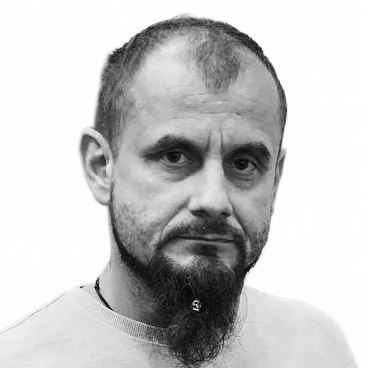
prof. Ing. Tomáš Sedláček, Ph.D.
Tomáš Sedláček focuses on research in the processing of polymer materials (profile extrusion, injection molding, film blowing, fiber production, and nonwoven fabric manufacturing) and in the characterization of polymer materials (thermal analysis, mechanical testing, rheological and viscoelastic properties).
2024 Appointed Professor in Macromolecular Substance Technology, Tomas Bata University in Zlín
2016 Appointed Associate Professor in Macromolecular Substance Technology, Tomas Bata University in Zlín
2004 Earned Ph.D. in Macromolecular Substance Technology, Tomas Bata University in Zlín
Read more …Prof. Ing. Tomáše Sedláček, Ph.d.
Support for increasing the personal development of highpotential researchers after career break
Registration Number: CZ.02.01.01/00/24_037/0013848
Project Annotation:
The proposed project deals with the support of high-potential researchers on or after a career break. The project will prepare a new grant scheme Return Grants and its implementation at UNI-UTB. This project will result in increasing the competitiveness of the target group and their re-entry into the research environment with the aim of achieving a certain collective at UNIUTB and thus compensating for the inability to engage in scientific activities during a career break.
Project Objectives:
The project's objective is to minimize the impact of a career break on further career growth and, by implementing return grants, compensate for gaps in research activities and start effective integration into the research environment. A partial objective of the project is also to enable researchers on a career break to stay in touch with the research or academic environment and to enable them to actively participate in R&D outputs.
Key project activities include:
The project "Support for increasing the personal development of highpotential researchers after career break" is co-financed by the European Union.
CZ.10.03.01/00/22_003/0000045 CirkArena, prof. Ing. Vladimír Sedlařík, Ph.D.
Read more … Projects of Ministry of the Environment of the Czech Republic
Porject name: CirkArena
Project registration number: CZ.10.03.01/00/22_003/0000045
Grant provider: Ministry of the Environment of the Czech Republic
Operational program: Operational Program Just Transition (OP ST)
CirkArena is a planned modern center supporting the circular economy in the Moravian-Silesian Region. Its main goal is to transform the region into a model of sustainable development, focused on research and efficient use of industrial waste such as slag, dust, bio-waste and construction materials.
The project will contribute to the transformation of the region by maximizing the use of secondary raw materials, supporting the sustainability and modernization of enterprises, and connecting industries, which will lead to a reduction in waste and support a circular economy. CirkArena is part of the broader SMARt And Green District (SMARAGD) initiative, which integrates the areas of materials, energy, environment and IT with the aim of ensuring a sustainable future for the region. More information about the initiative can be found here: https://www.smaragdova.cz/. This project is co-financed by the European Union.
Composition of the project consortium:
Project leader
Materials and Metallurgical Research Ltd.
Project partners
Research and development:
College of Mining - Technical University of Ostrava
Tomas Bata University in Zlín
Czech Technical University in Prague
Institute of Chemical Processes of the Academy of Sciences of the Czech Republic, v. v. i.
Brno Technical University
Education and awareness:
Institute of Circular Economy, z.ú.
Smart & Open Base for Innovations in European Cities and Regions, z.ú.
Czech Technology Platform for Sustainable Chemistry
Public sector:
Statutory City of Třinec
Regional Council for Development and Cooperation with its registered office in Třinec
Moravian-Silesian Innovation Center Ostrava, a.s.
Zenodo is a repository for storing and publishing scientific datasets which often accompany scientific publications.
TBU recommends using Zenodo for scientific data, especially of larger sizes.
Instructions for uploading a dataset
After registering and logging in to Zenod:
1) Request to include the record in the UTB community. The community manager will automatically approve author requests from TUB within a few days.
2) Upload the data files.
3) Typically you don’t have a DOI assigned to a dataset yet and you want Zenodo to assign a new DOI to it. Select “No”.
4) Select the record type “Dataset” and fill in the name of the data set.
5) If the data has already been previously published, indicate the date of the first publication. Otherwise, enter today’s date.
6) Fill in the creator of the result in the Creators section, possibly in the Contributors section. For each author, look for TBU in the list of affiliations and then manually write the English name of the faculty/part of TBU.
7) Describe the dataset. How was the data collected or measured? What methodology was used or where is it described? What lab equipment was used?
8) As an author within the meaning of copyright law, choose a license granting the public the right to use and distribute this data. We recommend choosing a permissive license with the obligation to mention you as the author: “Creative Commons Attribution 4.0 International”.
9) Select keywords that describe the data.
10) Select the funding source. Search for the provider in the list and fill in the grant code, its name and, if applicable, the URL link.
11) If you publish a scientific article based on this data, please include its DOI here.
Example of recording. Details on individual items are listed below.
Click image to enlarge.
Zenodo is a repository for storing and publishing scientific datasets which often accompany scientific publications.
TBU recommends using Zenodo for scientific data, especially of larger sizes.
Instructions for uploading a dataset
After registering and logging in to Zenod:
1) Request to include the record in the UTB community. The community manager will automatically approve author requests from TUB within a few days.
2) Upload the data files.
3) Typically you don’t have a DOI assigned to a dataset yet and you want Zenodo to assign a new DOI to it. Select “No”.
4) Select the record type “Dataset” and fill in the name of the data set.
5) If the data has already been previously published, indicate the date of the first publication. Otherwise, enter today’s date.
6) Fill in the creator of the result in the Creators section, possibly in the Contributors section. For each author, look for TBU in the list of affiliations and then manually write the English name of the faculty/part of TBU.
7) Describe the dataset. How was the data collected or measured? What methodology was used or where is it described? What lab equipment was used?
8) As an author within the meaning of copyright law, choose a license granting the public the right to use and distribute this data. We recommend choosing a permissive license with the obligation to mention you as the author: “Creative Commons Attribution 4.0 International”.
9) Select keywords that describe the data.
10) Select the funding source. Search for the provider in the list and fill in the grant code, its name and, if applicable, the URL link.
11) If you publish a scientific article based on this data, please include its DOI here.
Example of recording. Details on individual items are listed below.
Click image to enlarge.